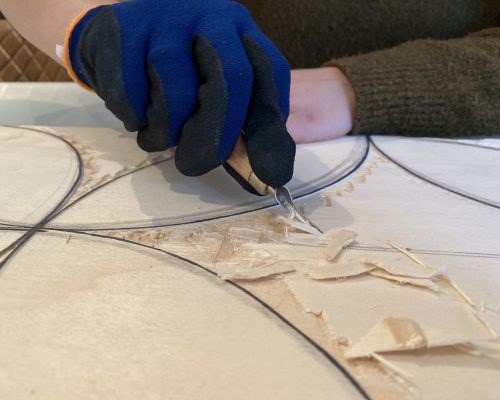
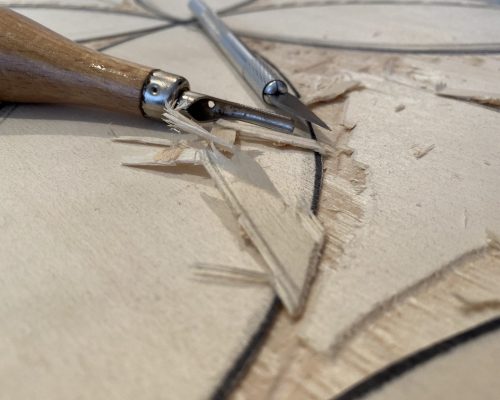
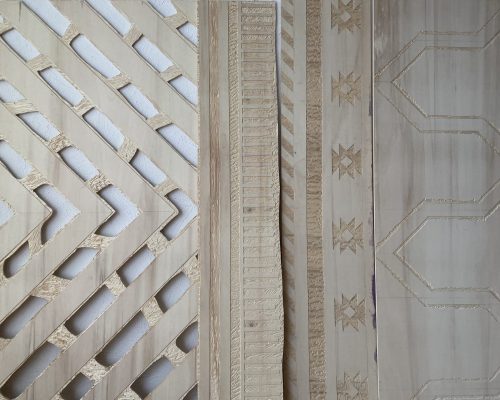
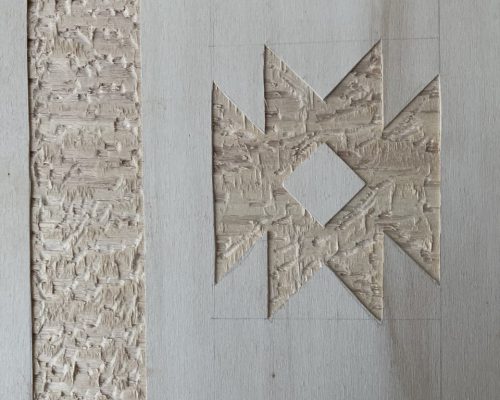
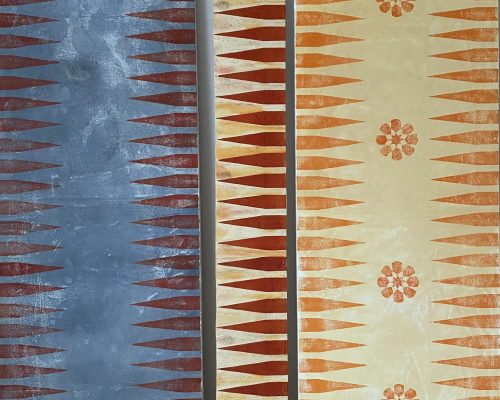
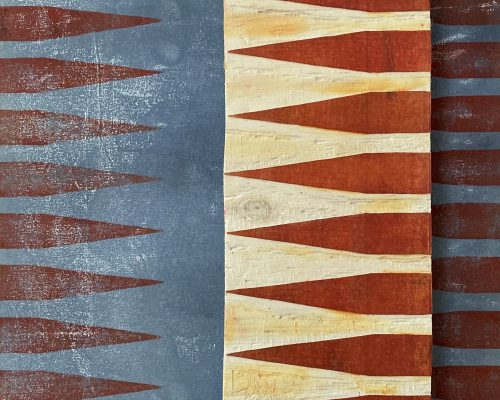
During the printing process the motives of the kilim are first carved into wooden plates. The technique of carving allows clear lines in the plate, resulting in clear forms. Various layers of colours are then applied on the wooden plates, in the last step the plate is used to print on canvas.
To keep up the large format, which is of central importance for the kilim and its effect, it has been developed an experimental method for a large-format print, which deviates from the usual DINA 3 printing and can be enlarged as desired.
The use of the wood as a printing base results in a dynamic application of the paint due to its individual grain. The wood prints its patterns, its coarser notches, even the finest cracks can be found in the print. It leaves traces. The colour surfaces are given a lively dynamic by the wood, and different colour intensities develop with each print. Together with traces from the carving process all this leads to a high individuality of the works. The signs are similar and yet they are not completely the same by hand- making, which distinguishes a real handcraft from machine production. Each work is therefore unique.